The day digital sales exploded
During the COVID-19 pandemic, the supermarket chain "G" realized that digital commerce was much more than just having a website. Between March and April 2020, its digital sales grew by 3,000%, and the company lacked the organizational structure needed to cope with this paradigm shift.
The "Personal Shopper" model doesn't work for supermarkets.
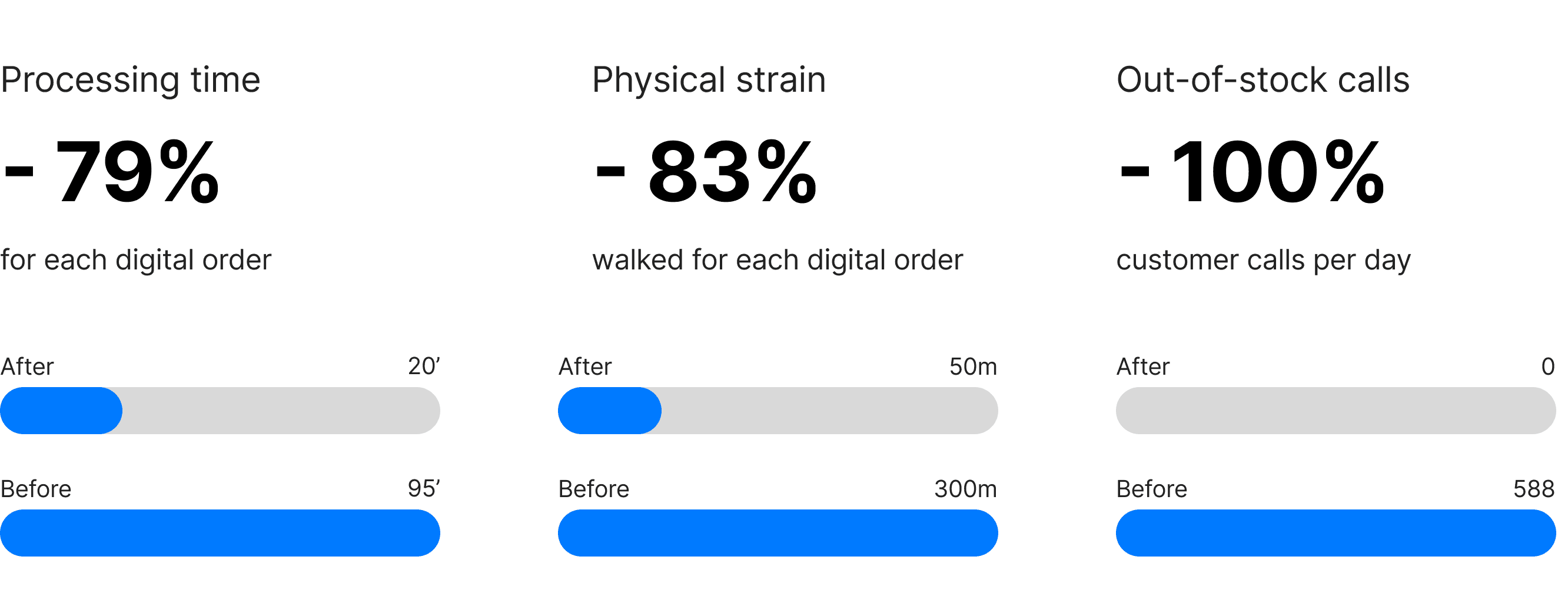
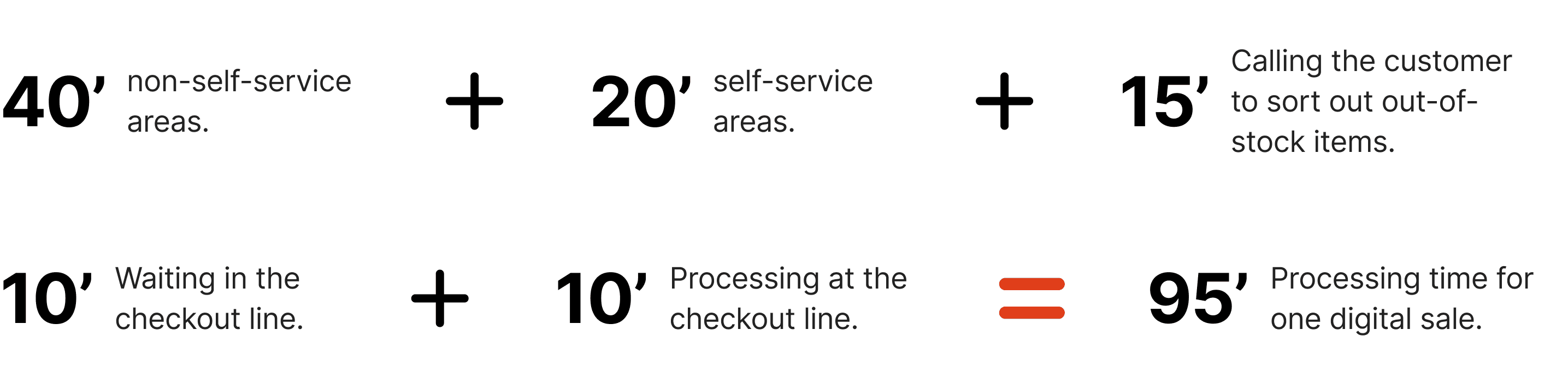
Initially, "G" had adopted a personal shopper model to process online orders, a format that took an average of 95 minutes per new order. They quickly realized it was neither scalable nor sustainable.
They called on us to analyze the situation and design an operating structure that could be implemented immediately with existing resources, in order to reduce processing times and costs, lower employee stress, and improve the consumer experience.
Research
We decided to carry out two types of in-situ research in parallel, since we needed to gather reliable information as quickly as possible.
Non-Participant Observation
We observed employees in their daily routine of processing online orders, in order to map every action the operation required and its friction points.
Contextual Interviews
We interviewed employees while they worked, to understand their mental models, how they made decisions, which tasks demanded the most physical or mental effort, and which ones gave them satisfaction.
Analysis and Mapping
We used the information gathered during the research to map the experience and identify the root cause of the operational bottlenecks.
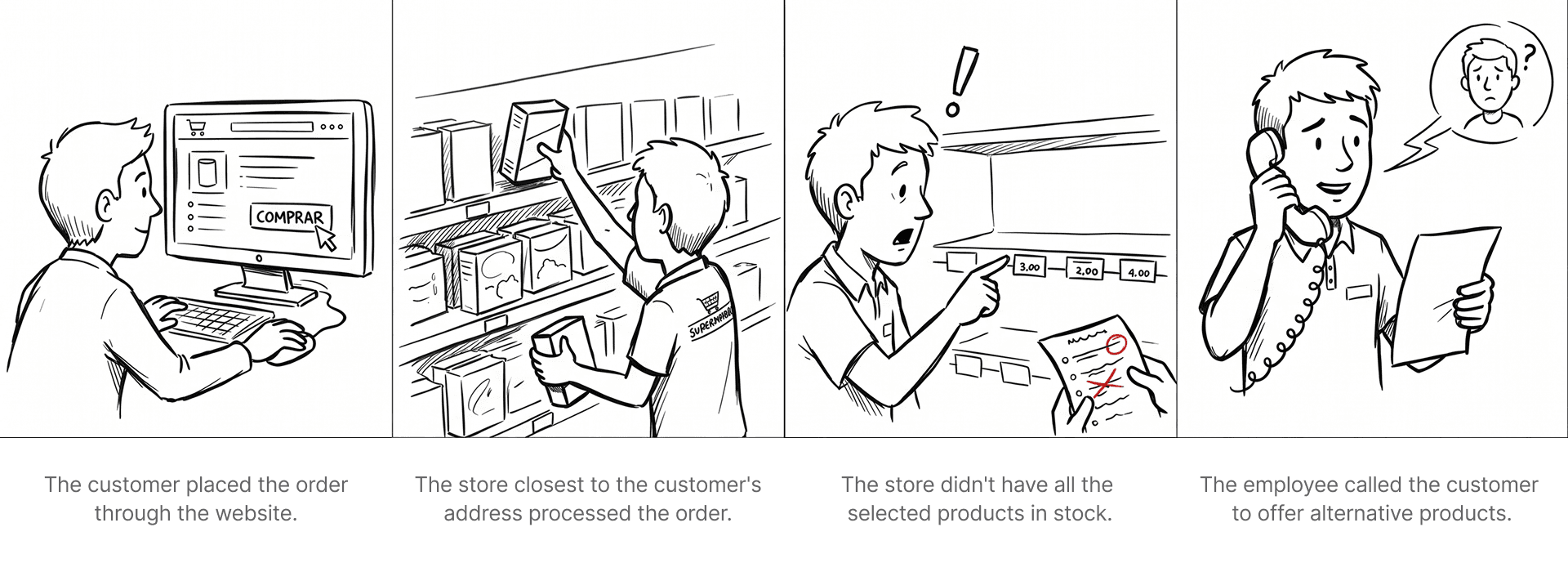
Key findings:
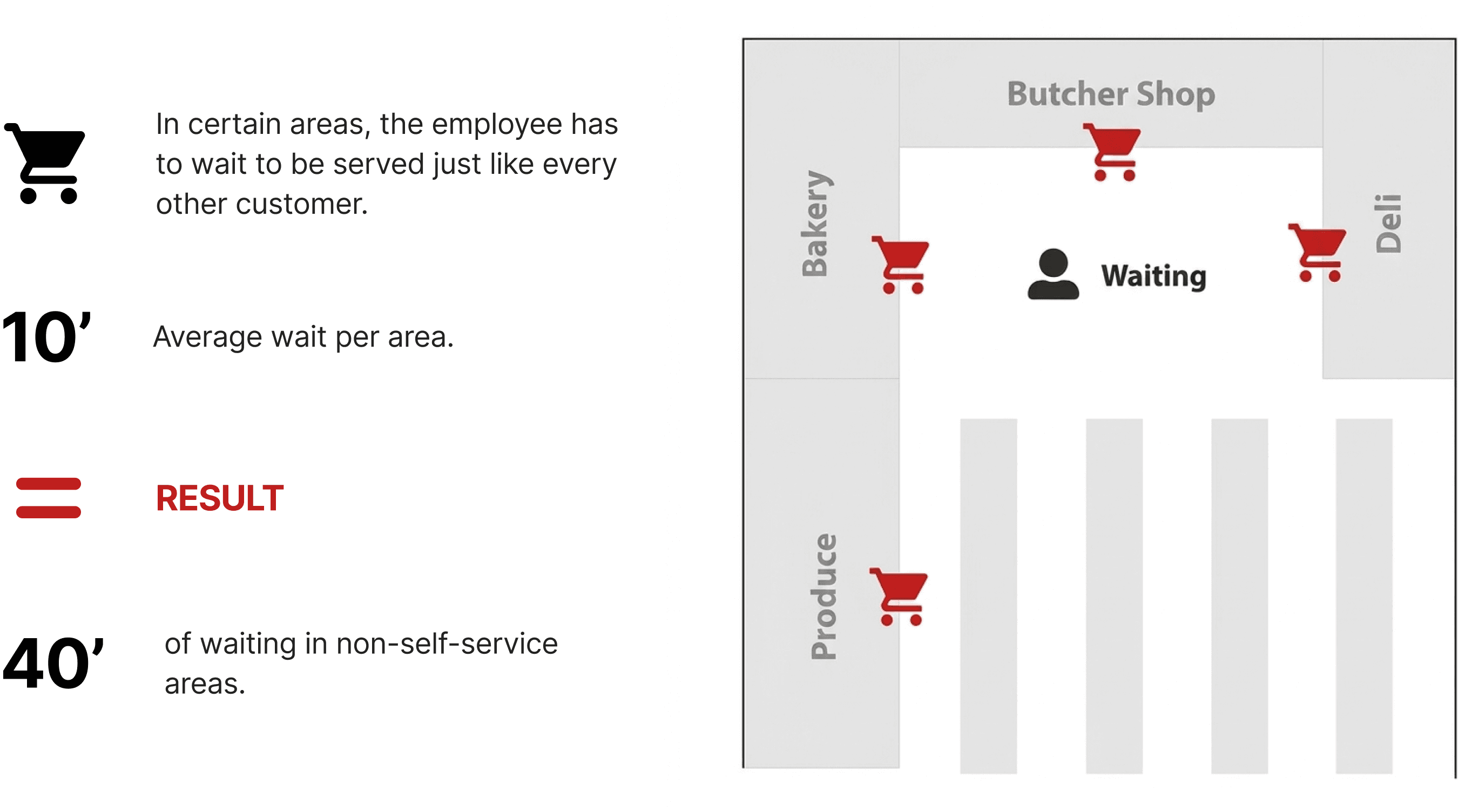
- Bottleneck: 42% of the time (40 min) was lost at assisted counters, 15 min on substitution calls due to out-of-stock items, and 20 min in the checkout line.
- Physical strain: Each employee walked at least 2.5 km a day inside the store to process orders.
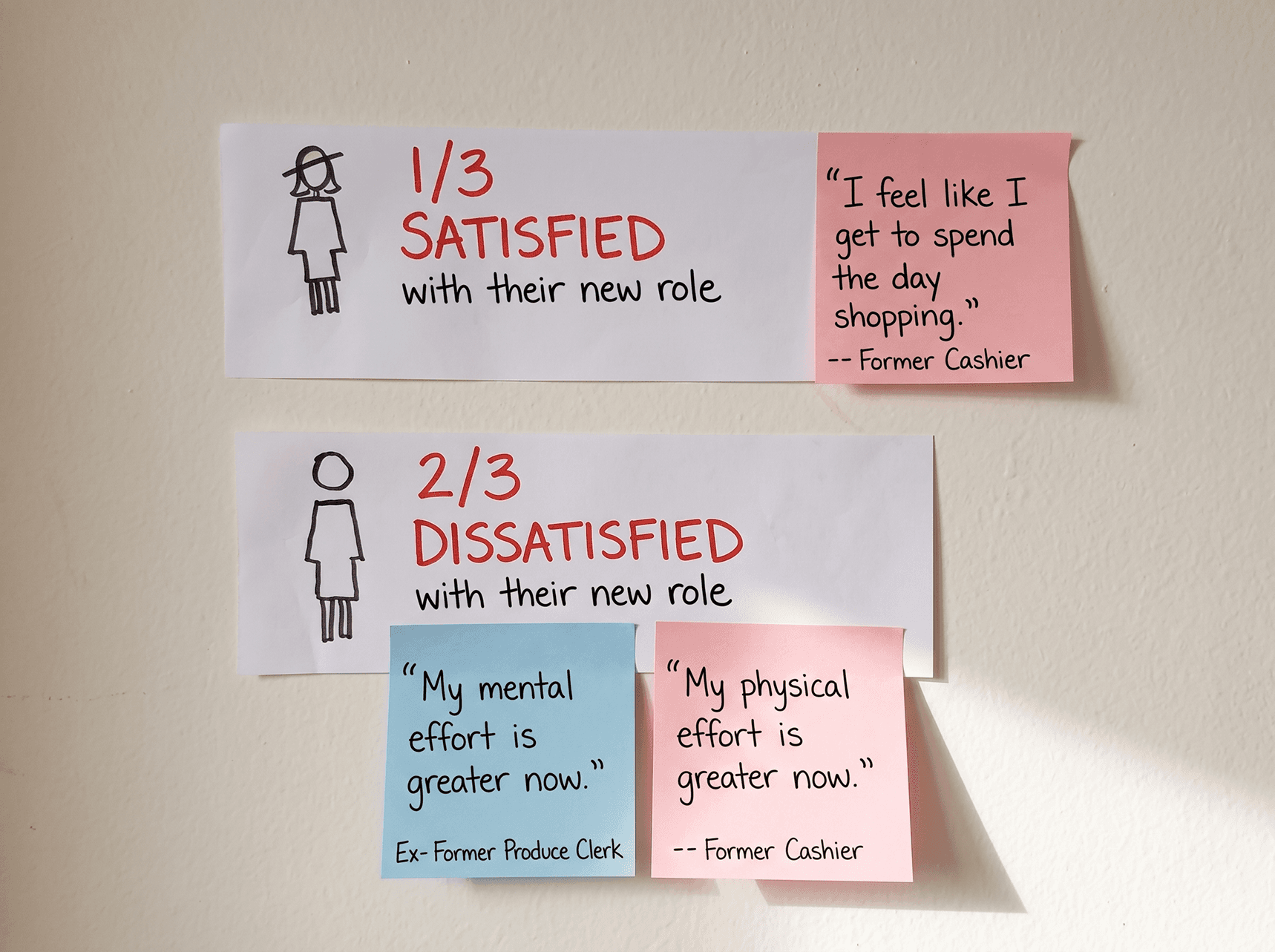
- Human friction: 2 out of 3 employees were dissatisfied with the new role imposed on them.
Walking the store like a customer
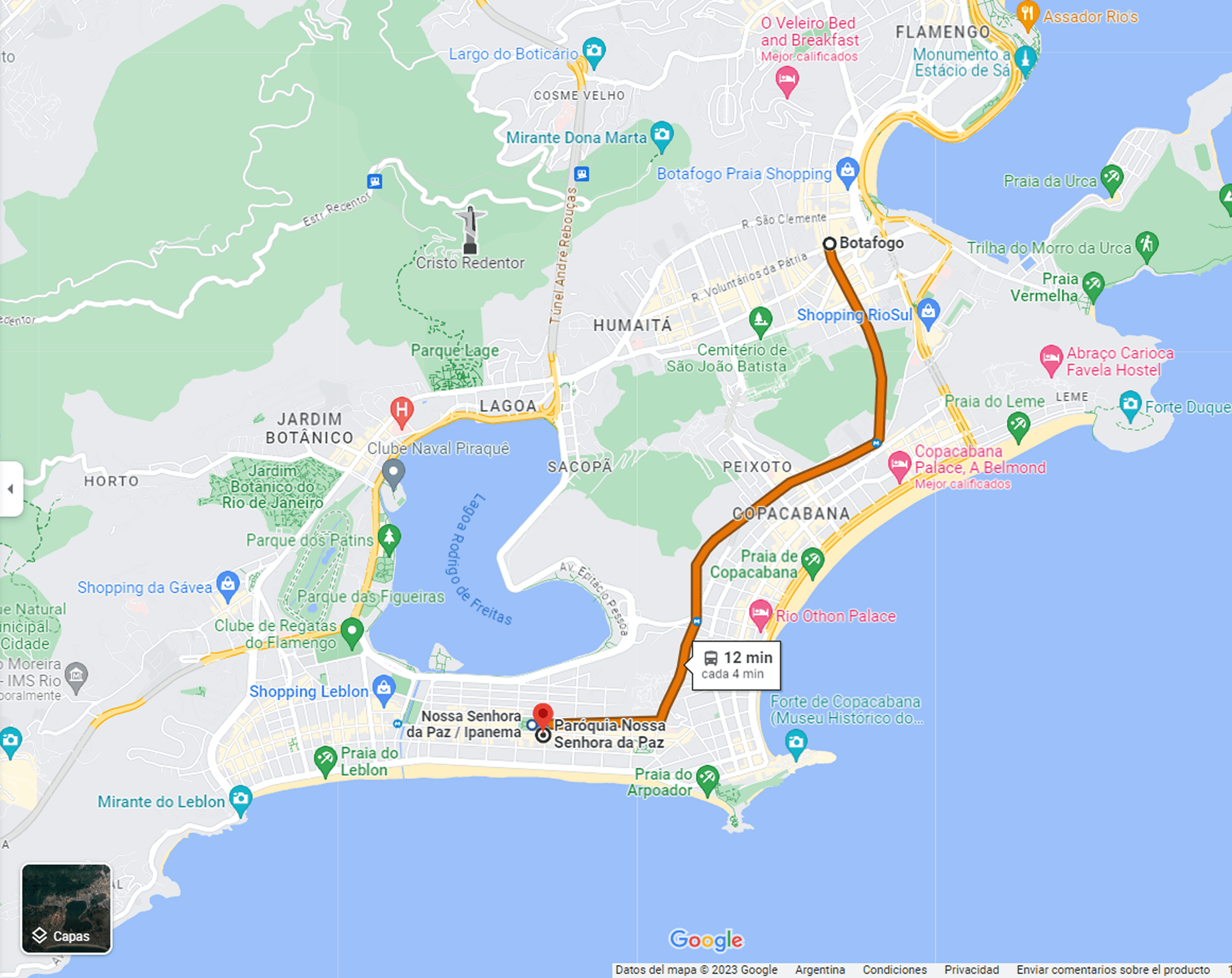
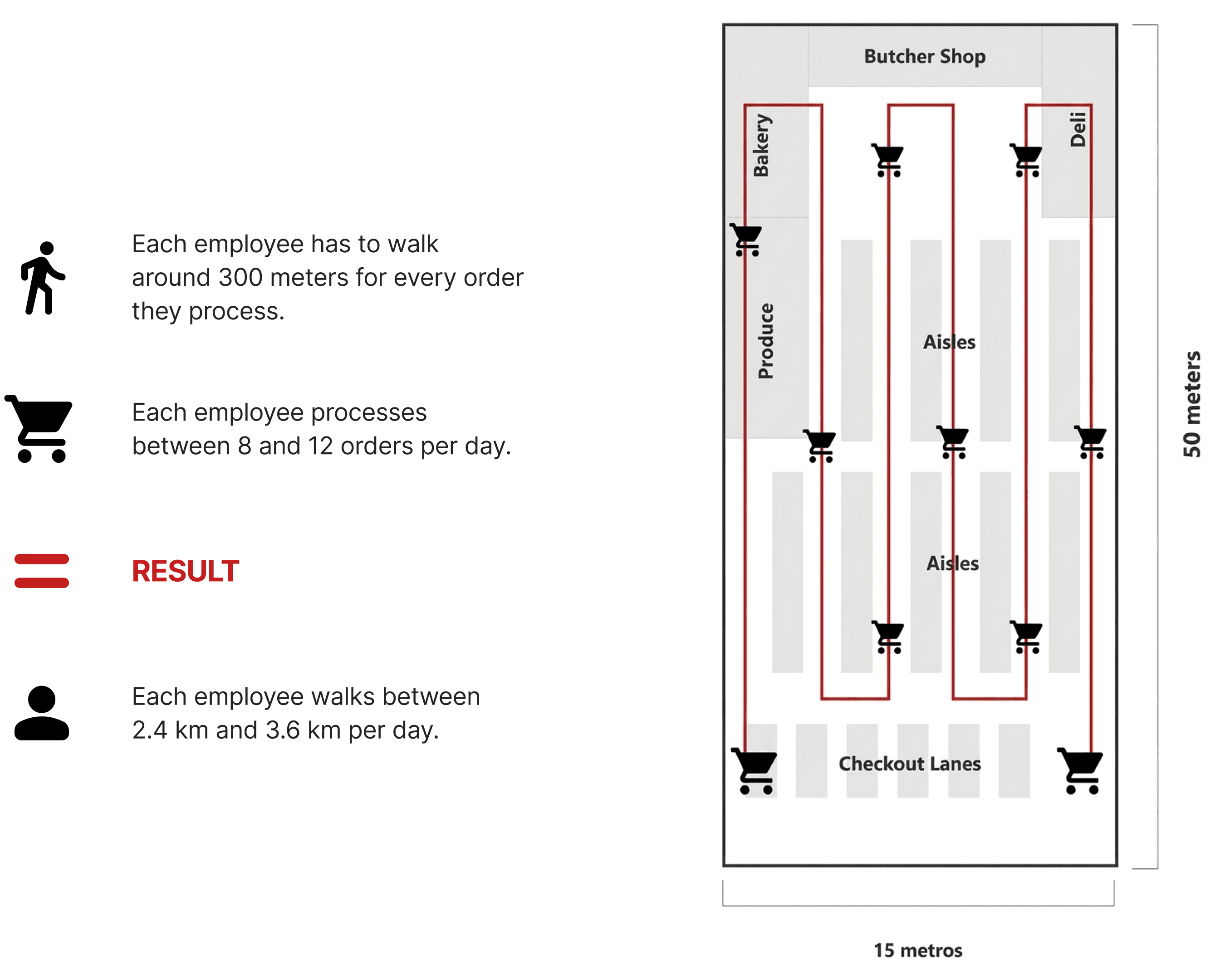
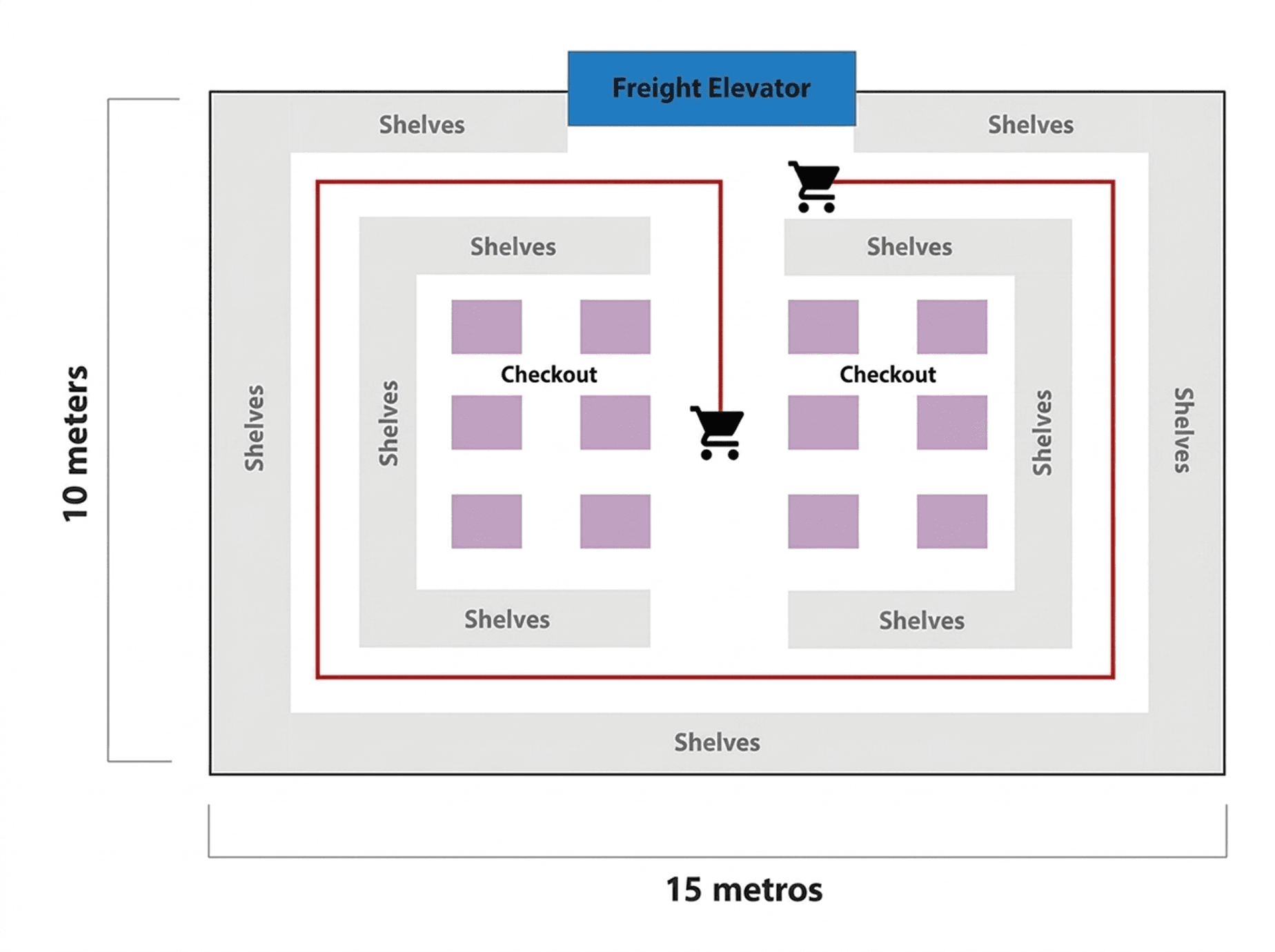
The red line represents the path an employee must walk as a Personal Shopper to process each order in one of the chain's smallest stores.
As a result, we observed that each employee walks around 300 meters per order processed, and since each one processes between 8 and 12 orders a day, the total distance walked in a working day amounts to 3.6 km.
In the larger stores, the daily distance an employee must walk as a Personal Shopper can triple.
Waiting like a customer
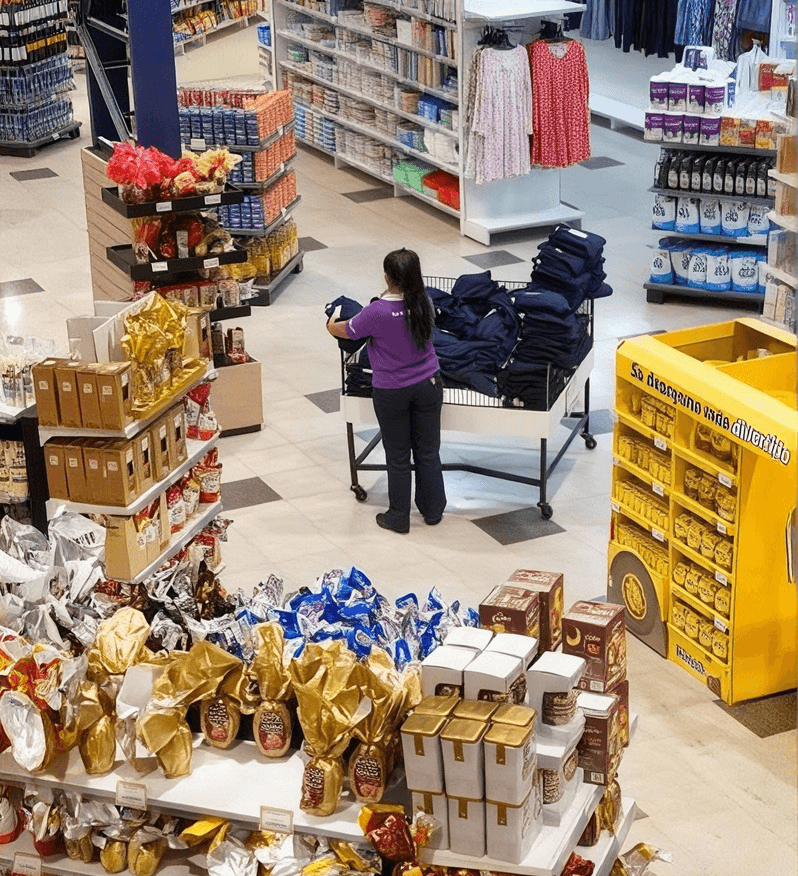
In certain areas, the employee has to wait to be served just like every other customer.
Order processing time
The research allowed us to clearly determine the processing times for each stage.
The MVP
The client asked us to reach a new minimum viable experience as quickly as possible, using existing resources, without the need for large investments in technology or construction, and capable of being implemented within a few weeks. It would act as a prototype on which we would iterate.
Logistics strategy
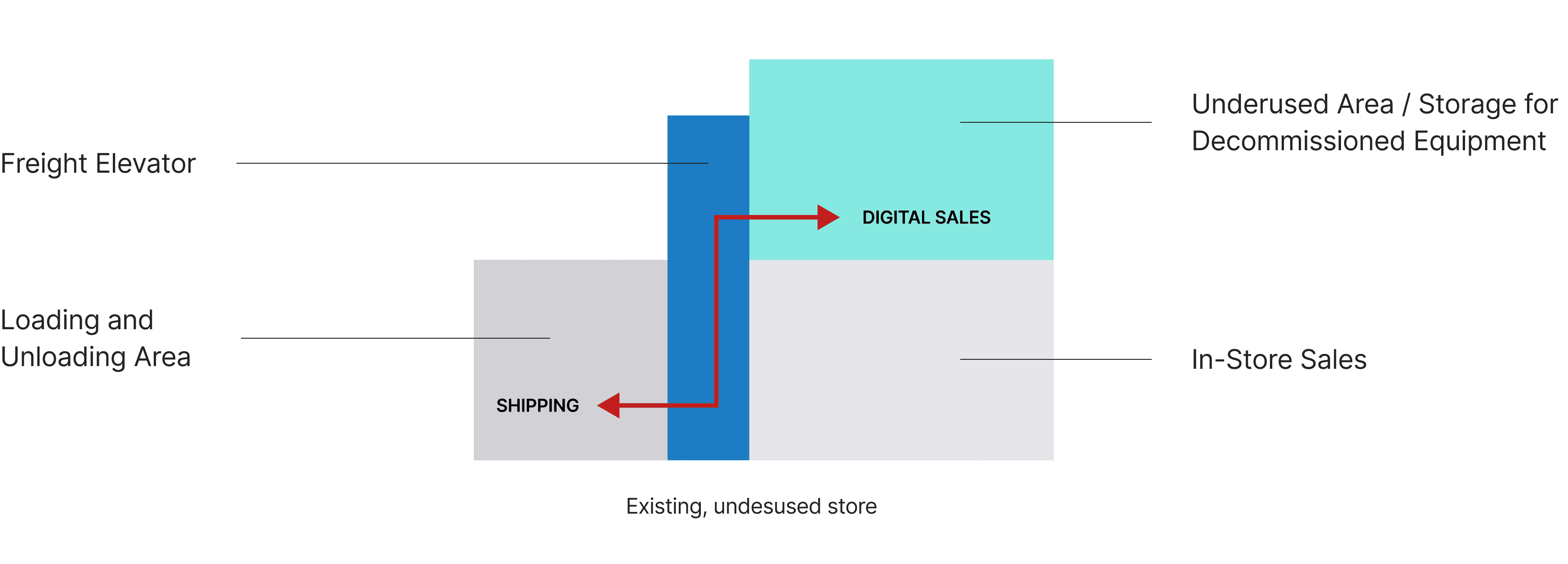
Channel the processing of digital sales to a location separate from the existing in-store sales structure.
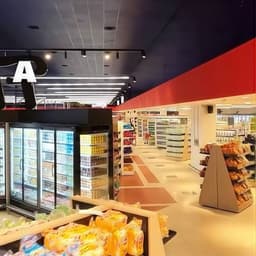
We identified an underused area in one of the stores that was also in a strategic location in the city, and we designed a micro dark store there to isolate the operation.
Spatial and catalog strategy
We designed the equipment layout to speed up processing times and reduce the physical effort employees were subjected to. We limited the online offering to pre-packaged products aligned with the new space's stock.
- Old equipment is repurposed to organize the products.
- There's no need to display the merchandise.
- Products can stay in boxes.
- Only pre-packaged products are sold.
Transition and human change management
We identified the 33% of staff who were satisfied with the new role and turned them into operational leaders of the new space.
The Result
We implemented the MVP in just three weeks, coordinating operations with the supermarket chain's staff. We measured the impact over the following two weeks and were able to confirm that: