Systematizing an emergent urban behavior
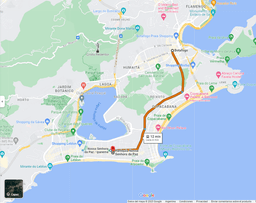
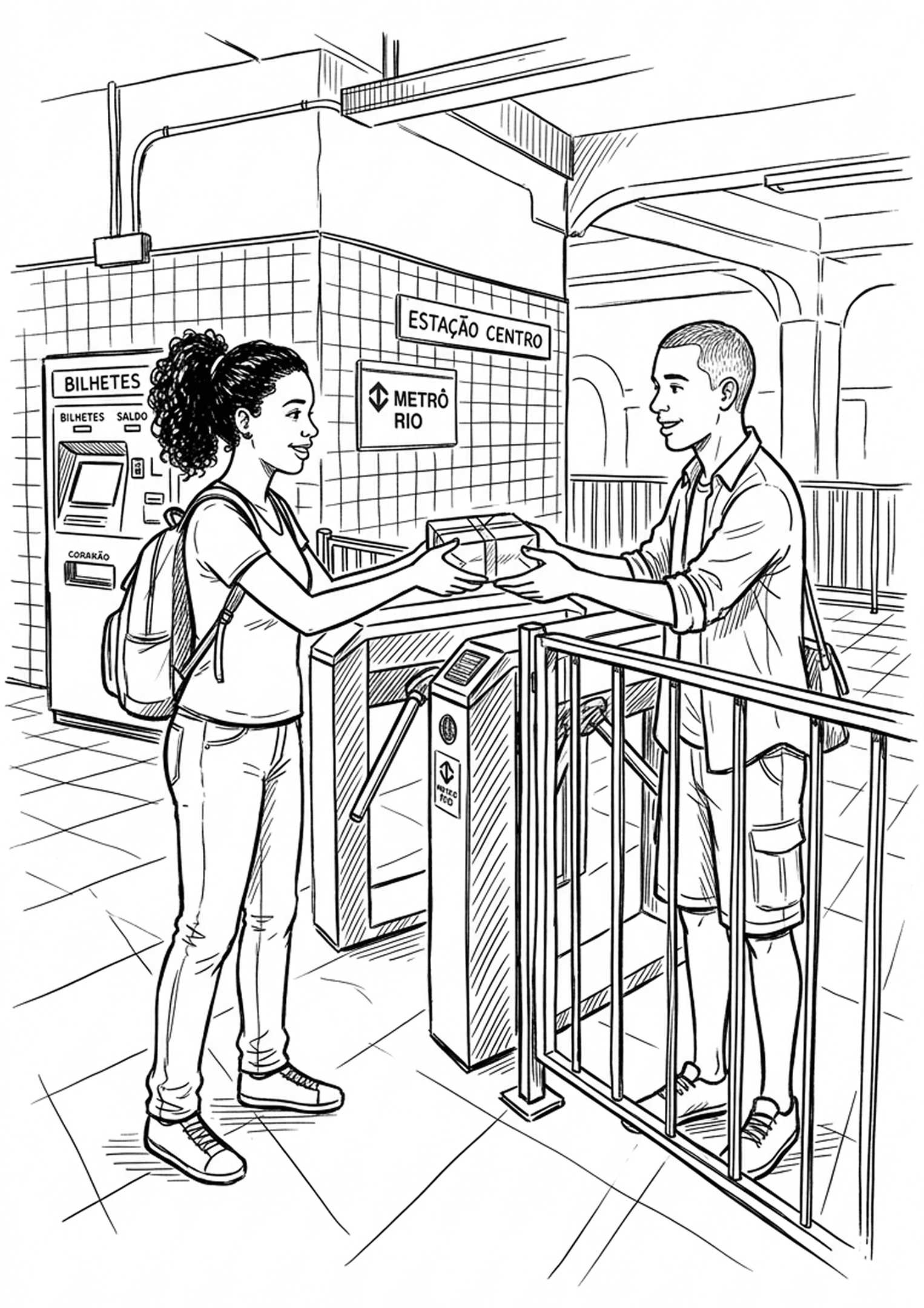
In Rio de Janeiro's metro stations, users began doing something fascinating: meeting at the turnstiles to exchange online shopping packages without leaving the station, leveraging the network and a single ticket to solve their own logistics. They were using the underground infrastructure for what the surface could no longer offer: immediacy and low cost.
This project takes that emergent behavior and turns it into a formal logistics system. A B2B/B2C distribution network integrated into the mass transit infrastructure to untangle last-mile collapse.
1. The Emergent Urban Behavior (The Rio Insight)
When formal infrastructure fails to resolve the city's economic friction, users create their own shortcuts.
The observation:
In the Rio de Janeiro Subway, two people exchange a package through the turnstiles. One of them doesn't cross the fare line: they use the same ticket to go back.
The strategic insight:
Public transit infrastructure was already functioning as a decentralized, low-cost distribution hub for informal commerce. Users had already solved the last mile by leveraging the underground network; all that was missing was the formal system to eliminate the friction.
2. The clash of two networks
Subway is historically designed for a single purpose: moving bodies.
The friction:
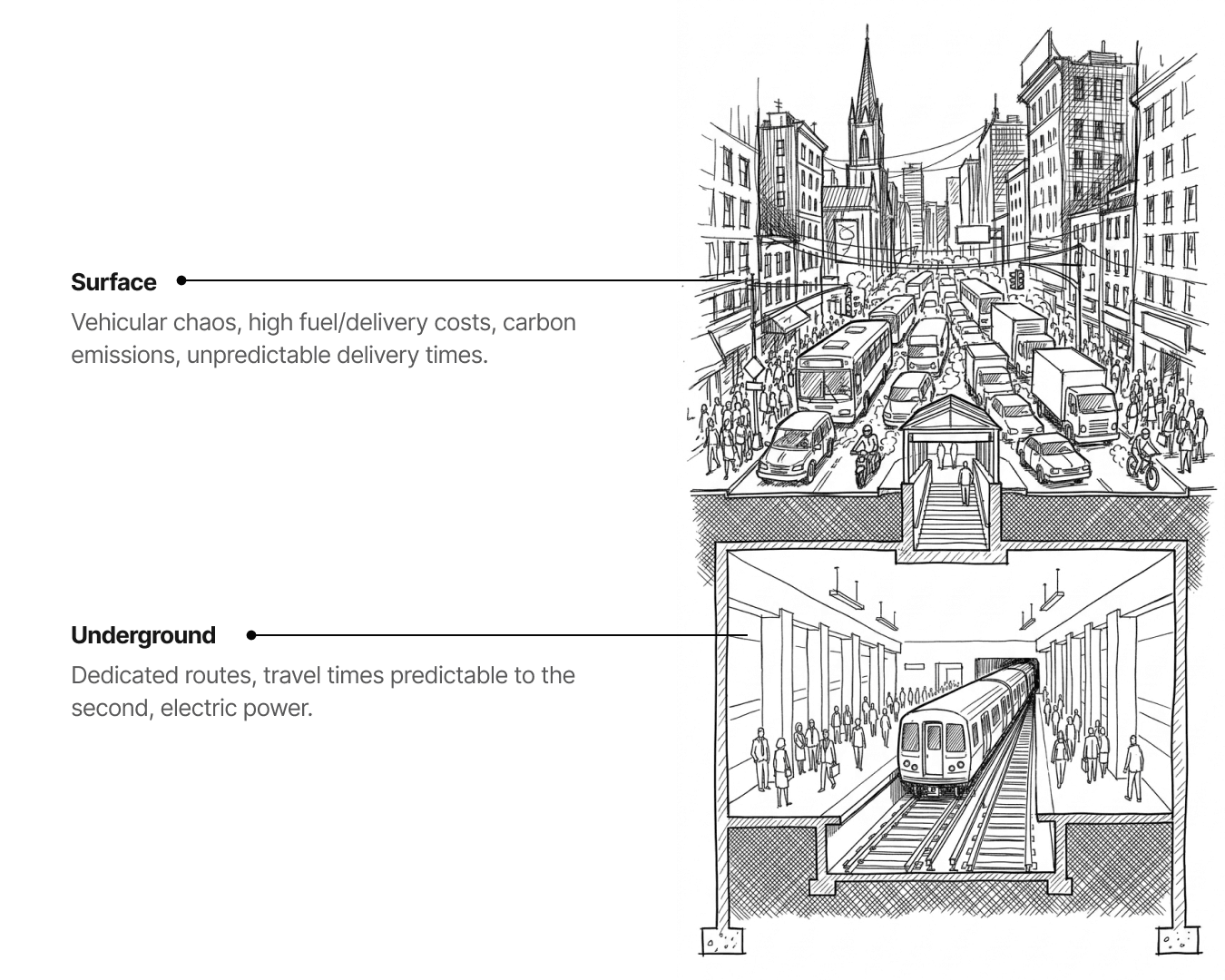
Surface logistics in dense Latin American metropolises are structurally broken: congested arterial roads, high carbon emissions, theft risks, and unpredictable delivery windows. Meanwhile, underground transit moves massive volume at deterministic speeds, but its physical architecture (turnstiles, corridors, platforms) strictly penalizes cargo or commercial dwell time.
The design challenge:
How do you inject physical freight into a passenger-only flow without generating spatial congestion or violating transit security protocols?
3. The minimum viable infrastructure
Scaling without heavy CapEx: deploying a lightweight operational overlay on existing transit assets.
- Mobile Node Ingestion: Movable transit racks placed at strategic station platforms for rapid loading/unloading during scheduled train dwell times.
- Dedicated Transit Capacity: Allocating off-peak space and dedicated carriage capacity to move cargo through the network without interfering with passenger volume.
- Station Accessibility & Handoff: Using existing station elevators and perimeter commercial stores as secured drop-off/pickup points.
- Decentralized Hyper-Local Delivery: Transforming perimeter stations into neighborhood micro-hubs. Once cargo arrives underground at the target district, last-mile delivery remains confined to local blocks rather than crossing the entire city grid.
4. The systemic impact
By turning a passenger transit network into a dual-purpose distribution infrastructure, the impact scales across four dimensions:
- Velocity & Predictability: Eliminating dependence on surface traffic bottlenecks, cutting transit times in half across dense urban corridors, and decoupling parcel delivery from rush-hour congestion.
- Decarbonization at Scale: Drastically reducing the volume of combustion and delivery vehicles on city streets, lowering overall urban carbon footprint and surface wear.
- Democratized Unit Economics: Operating on mass-transit economies of scale, bringing package transit costs closer to a standard subway fare and lowering barriers for local merchants and consumers alike.
- Hyper-Local Resilience: Restricting the final delivery leg to the immediate radius of each neighborhood station decentralizes urban logistics and empowers local commerce around transit hubs.